What to Do When Your Roof Starts Leaking
Move people and valuables away, contain water only if it is safe, turn off affected electrics if advised, photograph the damage and call a roofer. Never climb onto a wet roof.
Move people and valuables away, contain water only if it is safe, turn off affected electrics if advised, photograph the damage and call a roofer. Never climb onto a wet roof.
Get help with emergency roof repairs ↗
First, make the room safer
Keep people away from a bulging ceiling and move possessions from the wet area. Water and electrics are a dangerous mix, so seek appropriate help if fittings are affected.
- Do not puncture a sagging ceiling while standing below it
- Do not enter a loft beneath visible structural damage
- Use containers only from a stable, dry floor
Take useful photos from safe places
Photograph the internal mark, the wider room and the outside roof from ground level. Note when the leak started and whether wind direction seemed relevant.
Understand temporary work
A make-safe repair can reduce water entry until suitable weather or access is available. Ask what is temporary and what the permanent repair is likely to involve.
What the roofer should inspect
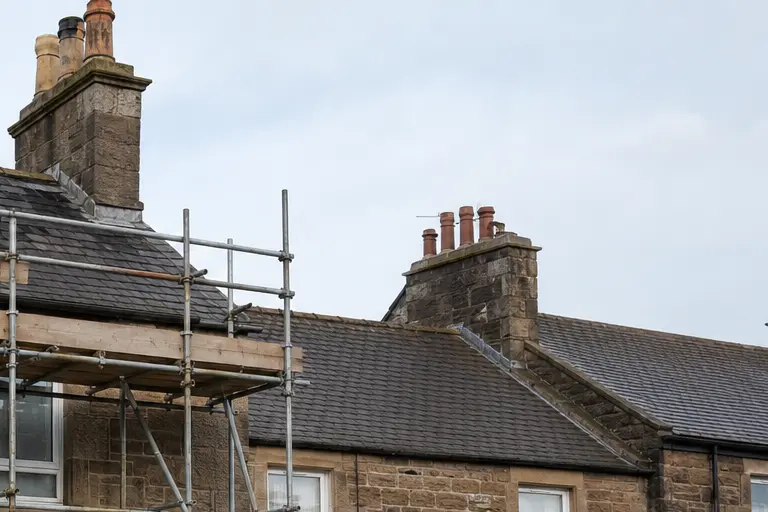
The check should follow the roof above the stain and include nearby slates or tiles, flashings, valleys, roof windows and drainage details.
Questions about this topic
Can roof photographs answer every question about an active leak?
No. Clear photographs help, but hidden underlay, fixings, deck and water routes may still need close inspection.
Should I inspect an active leak by climbing onto the roof?
No. Roof work is dangerous even when the check seems quick. Photograph an active leak from ground level or a safe window and leave close access to trained people with the right equipment.
When should I request a written quote for an active leak?
Ask for a written quote after an active leak and the access needs have been assessed. It should set out the work, materials, exclusions and any likely extras.