Where Roof Water Commonly Gets In
Common entry points include broken coverings, open flashings, valleys, roof-window corners and flat-roof edges. The actual route still needs evidence.
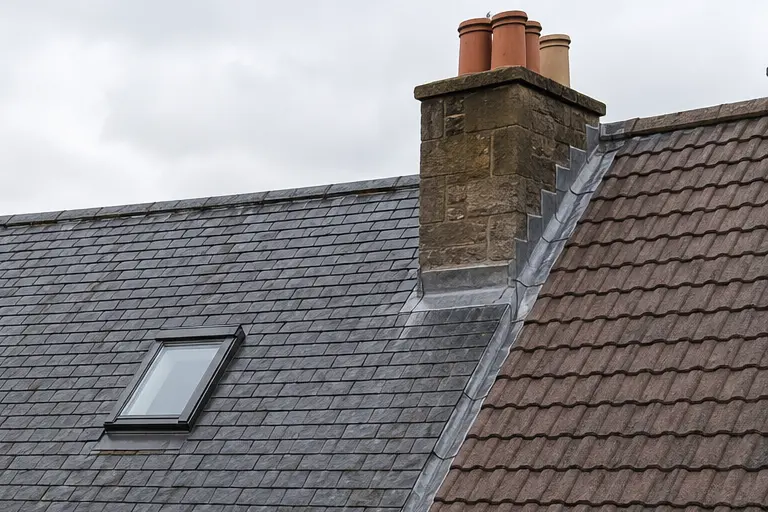
Common entry points include broken coverings, open flashings, valleys, roof-window corners and flat-roof edges. The actual route still needs evidence.
Get help with roof leak detection ↗
Slates and tiles
A crack, missing unit or failed fixing can expose the layers below. Wind-driven rain may then travel sideways before appearing indoors.
Flashings and abutments
Junctions around chimneys, walls and pipes depend on sound laps and secure chases. Surface sealant is rarely a complete long-term detail.
Valleys and drainage routes
Valleys carry concentrated water. Blockage, split lining or loose cuts beside the channel can all cause leaks.
Flat-roof edges and outlets
Open upstands, poor falls and restricted outlets can send water where the membrane was never designed to hold it.
Questions about this topic
Can roof photographs answer every question about roof water entry?
No. Clear photographs help, but hidden underlay, fixings, deck and water routes may still need close inspection.
Should I inspect roof water entry by climbing onto the roof?
No. Roof work is dangerous even when the check seems quick. Photograph roof water entry from ground level or a safe window and leave close access to trained people with the right equipment.
When should I request a written quote for roof water entry?
Ask for a written quote after roof water entry and the access needs have been assessed. It should set out the work, materials, exclusions and any likely extras.